Money is Debt
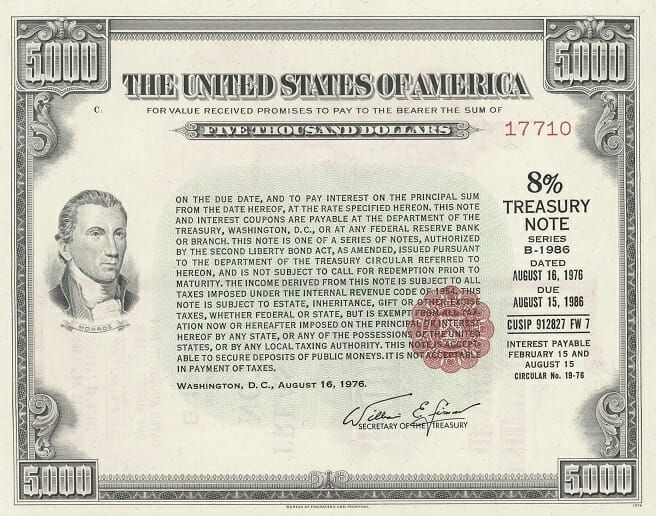
To create money, someone, whether an individual or a government, must sign a debt agreement, and in practice the bank creates it out of nothing. All the money in the world is created through debt, and if that debt were repaid, there would be no money left. People and governments constantly take on debt, and banks create money, that is how the economy moves.
This is the modern fiat system, or the paper money system. Most people have no idea where money comes from, yet this is fundamental to understanding the modern economy. How we got here is quite a fascinating story.
Barter and Commodity Money
The earliest form was the direct exchange of goods for goods. It was inefficient, however, due to the problem of the double coincidence of wants, if you have surplus grain and want shoes, you need to find a shoemaker who happens to need grain at that exact moment.
To solve the problems of barter, societies began using specific commodities as a medium of exchange.
Livestock was one of the oldest forms of money. In antiquity (and in many cultures until recently) cows, sheep, and camels served as a unit of account. The Latin word for money, pecunia, derives from pecus (cattle).
Grain in Mesopotamia, barley was the primary means of payment. Temples stored the grain, and payments were calculated in units of weight (shekels).
Salt was an extraordinarily valuable commodity, used to preserve food. In the Roman Empire, soldiers were often paid in salt, which is where the word salary comes from.
Cowrie shells were used in China, India, and Africa for thousands of years. They were lightweight, difficult to counterfeit, and easy to count, making them an ideal precursor to coins.
Tea, tobacco, and sugar in later periods, but before money became widespread in certain regions, these commodities functioned as currency.
Before coins appeared, people traded in pieces of metal like copper, bronze, iron, which were weighed at every transaction. In China, bronze objects shaped like knives and spades were used. In ancient Greece, iron rods (obeloi) were common. This period of semi-barter continued until the widespread introduction of minted coins around 600 BC in Lydia.
The Emergence of the First Coins
Before coins, people used lumps of silver known as hacksilber. The problem was that at every transaction, merchants had to weigh the metal on a scale and verify its purity, checking whether it had been mixed with copper or lead. This slowed trade and created opportunities for fraud.
The first true coins appeared in the kingdom of Lydia (modern-day Turkey). They were not made of pure gold or silver, but of electrum, a naturally occurring alloy of gold and silver found in the Pactolus river.
The key innovation was not the metal itself, but the stamp. The king, the most famous being Croesus, placed his symbol (usually a lion or bull) on a piece of metal of fixed weight. That stamp meant two things: the state guarantees the weight, and the state guarantees the purity. There was no longer any need for scales, people simply counted the coins.
The Greek city-states quickly adopted the idea. Each state began minting its own coins, which also served as propaganda. Athens used silver tetradrachms bearing the image of an owl (the symbol of the goddess Athena) and they became the first international reserve currency in the region, thanks to their consistently high quality. Rome initially used large bronze blocks (aes signatum), but later transitioned to the silver denarius, which dominated Europe and the Mediterranean for centuries.
Seigniorage: The First Step Toward the Fiat System
In Lydia and ancient Greece, the ruler - the seigneur held a monopoly on minting. If a silver coin contained silver worth 90 cents but was stamped with a face value of one dollar, those 10 cents went to the treasury to cover minting costs and as pure profit for the ruler.
This is the historical trick that preceded modern inflation. When the treasury ran dry usually because of war, rulers began reducing the precious metal content of coins while keeping their face value unchanged.
The example of the Roman Empire: the silver denarius was originally almost pure silver. By the reign of Marcus Aurelius it was around 75% silver, and a century later, under Gallienus, it contained barely 5% silver and the rest was copper. The result was that the state extracted enormous seigniorage in the short term, but in the long term triggered hyperinflation, as people stopped believing in the stamped value.
The Dutch Guilder: From Physical Gold to the Bank Ledger
Amsterdam created the prototype of the modern monetary system. In the early seventeenth century, trade was chaotic, thousands of gold and silver coins of varying weight and purity circulated across Europe, making large transactions slow and risky.
In 1609, the Amsterdamsche Wisselbank (the Amsterdam Exchange Bank) was established, introducing a revolutionary innovation. It accepted any coin, weighed it, and calculated its precise precious metal content. Instead of returning physical coins to the merchant, it opened a credit in their account denominated in bank guilders.
This was the historical moment when money began to separate from its physical form. Merchants started settling payments without touching a single coin, they simply transferred balances from one account to another in the bank's ledgers. The bank guilder became so reliable that it traded at a premium over physical coins. People preferred the number in the book to the metal in their pocket.
The guilder became the first globally dominant currency, underpinning the international trade of the Dutch East India Company. Although the Wisselbank officially maintained 100% gold and silver backing for its deposits, it laid the foundation for a psychological shift, the idea that money could simply be an entry in an accounting ledger. It was precisely this trust that later allowed the London goldsmiths to take the next, far riskier step.
The London Goldsmiths: The Architects of Modern Banking and Money as Debt
While the Amsterdam bank operated as a public store of value, in seventeenth century England the absence of a centralized institution left a gap for private initiative. London merchants began leaving their gold with goldsmiths, who had the most secure vaults in the city.
In exchange, the goldsmiths issued paper receipts “Goldsmith's Notes” guaranteeing that the bearer could reclaim their metal at any time. Like the Dutch guilder, these receipts began circulating as a convenient means of payment. But here the London craftsmen made the historical discovery that defines the modern world.
The observation of the reserve. The goldsmiths noticed that at no point did all depositors come at the same time to withdraw their gold. Typically, around 90% of the metal remained in the vault while people simply exchanged their paper notes outside.
This was the birth of fractional reserve banking. They realized they could issue more receipts than the gold they actually held, and lend them out at interest. The moment a goldsmith lent out a receipt for gold that was not his, he was creating money from nothing.
This was a fundamental shift. In the Netherlands, the bank record had been a receipt for existing property. In London, the bank record became a promise of future payment. The money supply was no longer constrained by the amount of metal in the ground, it began to depend on the capacity to generate debt.
1694: The Founding of the Bank of England and the Faustian Bargain
At the end of the seventeenth century, England was exhausted by wars with France, and King William III desperately needed money that no one was willing to lend him. Then a Scotsman named William Paterson appeared with a proposal that would change financial history forever.
A group of private bankers heirs to the goldsmiths' ideas offered the king a loan of £1.2 million in gold. In return, they did not ask merely for interest, but for something far more valuable: a royal charter to establish a joint-stock company called the Bank of England.
That charter gave them the exclusive right to be the sole bank servicing the national debt, and to issue their own banknotes backed by that debt.
How does the magic of legalized seigniorage work? This was the moment the goldsmiths' model became institutional. The bank gave the gold to the king, an asset for the bank, a debt for him. Instead of the gold disappearing, the bank issued banknotes of the same value, claiming they were as good as gold because the state guaranteed payment through future taxes.
In this way, the economy now contained twice as much money, once in the gold the king spent on cannons, and again in the banknotes people used in trade. The result: the state gained an unlimited source of financing for wars, and the banks gained the right to collect interest on money they had in practice created from nothing, backed by the Crown's debt.
The Eighteenth Century: Banking Panics and the Birth of the Gold Standard
The Bank of England established a model that was quickly copied across Europe. But along with it spread an inherent weakness, the system only worked as long as people believed in it.
In 1720, that belief was tested severely and simultaneously on two fronts. In England, the South Sea Company promised fabulous profits from trade with Latin America, raised capital on the basis of a pyramid scheme, and collapsed catastrophically, wiping out the savings of thousands of investors including Isaac Newton, who lost around £20,000. At almost the same time, in France, the Scotsman John Law persuaded the regent Philippe d'Orléans to allow him to build an entirely new monetary system, the Banque Générale, which issued banknotes backed not only by gold but also by shares in the Mississippi Company, which supposedly would exploit the riches of Louisiana. When it became clear that those riches were largely imaginary, the system collapsed within months, and the word for shares acquired such a bad reputation in France that the country lagged behind in developing capital markets for an entire century.
Both crashes raised the same question: how do you impose discipline on the issuance of money?
The answer came gradually and quietly. Isaac Newton, in his role as Master of the Royal Mint, fixed the price of gold at £3, 17 shillings and 10.5 pence per troy ounce in 1717. The decision was technically a matter of monetary reform, but its consequences were enormous. Britain had in practice entered what would later be called the gold standard. Every banknote had a fixed value in gold, and the quantity of gold in reserves limited how many banknotes could be issued.
The system imposed iron discipline. Governments could not finance wars with the printing press without consequence, every additional expense required a real inflow of gold or tax revenue. Prices remained relatively stable for decades. International trade flourished, because merchants knew that the pound tomorrow would buy approximately the same as the pound today.
But the system had a quiet contradiction built into it that would eventually destroy it two centuries later. Economies grew, the need for money grew with them, but gold production depended on geology not on human need. When money became too scarce relative to the economy, deflation suffocated debtors. Farmers borrowed in expensive pounds and repaid in even more expensive ones. That tension would be felt in full force only at the end of the nineteenth century, but the seed had already been planted.
The Nineteenth Century: The Gold Standard and Its Contradiction
After the chaos of the eighteenth century, the world gradually found an anchor. By the middle of the nineteenth century, almost every developed nation had adopted the gold standard, every banknote was a promise of a fixed quantity of gold that could be claimed at any time. Britain was the pioneer, but Germany, France, the United States, and dozens of others soon followed.
The mechanism was elegant in its simplicity. If a country imported more than it exported, it paid the difference in gold. Gold flowed out, the money supply contracted, prices fell, exports became cheaper, and the trade balance corrected itself automatically, without central bankers, without political decisions.
The result was remarkable price stability. Prices in England in 1900 were roughly the same as in 1800. International trade flourished because every merchant knew exactly what the money they worked with was worth. It is no coincidence that this era is called Pax Britannica, the British pound, firmly tied to gold, was the world's de facto reserve currency.
But the system carried within it a cruel contradiction. The economy grew every year, more people, more goods, more transactions. The need for money grew with it. Gold production, however, depended on geology, not on economic needs. When money became too scarce relative to the economy, deflation set in and prices fell, but debts remained unchanged. The farmer who had borrowed from the bank had to repay the same sum, but his grain was worth less and less. With each passing year, the debt weighed more in real terms.
At the end of the nineteenth century, this contradiction became a political storm in the United States. Farmers and debtors organized around a single demand - add silver to gold, so that more money would circulate and debts would ease. William Jennings Bryan delivered his famous speech: "You shall not crucify mankind upon a cross of gold." He lost the election, but the question remained open.
The answer came not from politicians, but from history. Two world wars made the impossible possible and ended the gold standard forever.
1914–1944: The Two Wars That Killed the Gold Standard
The gold standard had one fatal flaw - it only worked in peacetime. War is expensive. Far more expensive than any country could afford from taxes and borrowing alone. And when the guns began firing across Europe in August 1914, governments one by one made the same decision: they suspended the convertibility of banknotes into gold and switched on the printing presses.
Germany, France, Russia, Austria-Hungary all of them did it within the first weeks. Britain held out a little longer, but it too gave in. Four years of war were financed largely with newly created money. The result was predictable - inflation everywhere, but nowhere as dramatically as in defeated Germany.
The German hyperinflation of 1923 is perhaps the most vividly documented economic collapse in history. In early 1922, one dollar bought around 320 marks. A year later, it bought 4.2 trillion marks. People carried money in wheelbarrows because their wallets could not hold enough banknotes. A lifetime of savings evaporated in months. This trauma cut so deeply into the German psyche that fear of inflation has shaped German economic policy to this day.
After the war, the victors tried to restore the old order. Britain returned to the gold standard in 1925 at the pre-war exchange rate, as if nothing had happened. The mistake was enormous, the pound was overvalued, British exports became more expensive, unemployment rose. Five years later, the Great Depression delivered the final blow. Countries competed to protect their gold reserves, raising interest rates and tightening credit precisely when their economies needed the opposite. Britain abandoned the standard in 1931, the United States did so partially in 1933, when Roosevelt confiscated private gold and prohibited citizens from holding more than a small amount.
By 1939, the gold standard was dead in practice. The only question remaining was what would replace it.
1944: Bretton Woods - The Dollar as the New Gold
The war had not yet ended when the victors were already designing the next world order. In July 1944, representatives of 44 nations gathered in the small resort town of Bretton Woods, New Hampshire, with a single task to create a monetary system that would prevent a repeat of the interwar chaos.
Two men sat at the table with two different visions. The Briton John Maynard Keynes proposed something radical, a supranational currency called the bancor, managed by an international institution in which no single country held a dominant voice. The American Harry Dexter White proposed something far simpler: the dollar at the center of the system.
The outcome of the negotiations was settled before they began. The United States held over two-thirds of the world's monetary gold, its economy was the only one in the world that had emerged from the war stronger than it entered, and its military was everywhere. Keynes lost. White's plan was adopted.
The system was simple and clever. The dollar was fixed to gold at $35 per ounce and only the central banks of other countries could exchange dollars for gold, not private individuals. All other currencies were fixed to the dollar within narrow bands of fluctuation. In practice, the world was on a gold standard, but instead of gold at the center stood the dollar, and behind the dollar stood the American economy.
Two new institutions were born, the International Monetary Fund, to assist countries facing payment difficulties, and the World Bank, to finance postwar reconstruction. World trade flourished. Europe and Japan recovered at an unprecedented pace. The system worked brilliantly, but only for as long as the Americans held up their end of the bargain.
The bargain was this: for everything to work, the dollars circulating in the world had to be backed by real gold at Fort Knox. Once dollars outnumbered the gold behind them, the system would lose its foundation. And that is exactly what happened in the late 1960s, the Vietnam War, Johnson's Great Society programs, and a growing military presence across the globe required expenditures that America covered with newly created dollars. European central banks noticed the discrepancy and quietly began exchanging their dollars for gold. The reserves bled out.
The system was alive, but the clock was ticking.
1971: Nixon Closes the Gold Window
On the evening of Sunday, August 15, 1971, President Richard Nixon appeared on national television with an emergency announcement. Americans expected to hear something about Vietnam. Instead, Nixon announced that the United States was suspending the convertibility of the dollar into gold. Officially a temporary measure to protect the American economy from international speculators. In practice the end of the last link between money and a physical asset in the history of mankind.
How did it come to this? Throughout the 1960s, the Kennedy and Johnson administrations spent heavily, the Vietnam War cost billions, and the Great Society programs did too. Dollars in global circulation grew far faster than the gold at Fort Knox. The economist Robert Triffin had identified the problem as early as the early 1960s, in what is now called the Triffin Dilemma: for world trade to function, America must export dollars, but the more dollars it exports, the more it undermines confidence in their gold backing.
De Gaulle's France was the first to act. The French sent a warship to New York to load up physical gold in exchange for their dollars, a demonstrative gesture that sent a clear message to Washington. Other central banks soon followed. By 1971, America's gold reserves were half of what they had been at the end of the Second World War.
Nixon had no choice. His team, economist Milton Friedman and adviser Paul Volcker explained the mechanics: the system was mathematically unsustainable and collapse was a matter of when, not if. Better to act in a controlled manner than to wait for panic to decide for them.
The decision was made over a weekend at Camp David, without consulting the rest of the world. Allies learned of it at the same time as ordinary Americans, from the television. The reaction in Europe was fury. The French called it economic warfare. But no one could do anything, because the dollar was too deeply embedded in world trade to be abandoned overnight.
Since that day, the world has lived in the system I described at the very beginning. Every banknote is a debt. Every dollar, euro, or yuan exists because someone, somewhere, signed a loan agreement. There is no gold, no silver, no physical asset behind them, only trust in the institutions that issue them.
Nixon's temporary measure has now lasted more than 50 years.
Member discussion