The war Iran won without winning
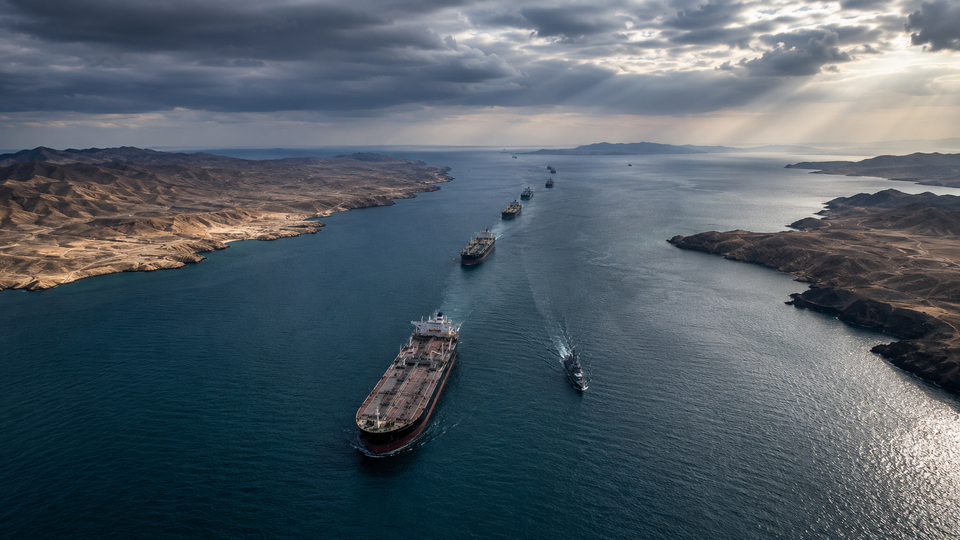
Hormuz, drones, and the price of a war no one calculated in advance.
Liquidity Desk | May 2026 | Geopolitical Analysis
Introduction: The Wrong Question
Everyone is asking who won the war. The right question is who changed the rules.
When a conflict ends without a clear winner, history tends to remember not the final outcome but the lessons that redraw the next generation of military and economic strategy. This war did exactly that. Four distinct lessons have emerged, none of them comfortable, all of them consequential.
1. Hormuz as a Nuclear Weapon
For decades, Western analytical consensus focused on Iran’s nuclear programme as the existential threat in the region. We missed something more obvious and more lethally practical.
The closure of the Strait of Hormuz was described by the International Energy Agency as “the largest supply disruption in the history of the global oil market.” Roughly 20% of global oil supply and all of Qatar’s LNG exports transit through this narrow passage, a chokepoint that can be blocked with simple means even against superior American firepower: cheap drones and sea mines.
Iran’s nuclear weapon was never intended to destroy an enemy. It had one function: to guarantee regime survival against external interference, precisely the same logic as North Korea. But Iran realised something more fundamental. The consequences of a closed Hormuz for the global economy carry the weight of a nuclear weapon, without a single atom of fissile material, without international isolation, without the risk of a pre-emptive strike. The weapon is embedded in geography.
Classical nuclear deterrence theory rests on two pillars: capacity for destruction and credibility of threat. Hormuz satisfies both. It offers an additional advantage: the threshold for use is incomparably lower, and the international response is incomparably less clear than it would be for a nuclear strike. If Iran launches an atomic bomb, the consequences for the regime are predictably catastrophic. If Iran blocks Hormuz, the world suffers and no one quite knows who to punish, how, or with what.
The irony is elegant: precisely because Hormuz is so destructive, it is most effective as a threat rather than a fully realised blockade. Exactly like nuclear weapons. You don’t use it to win. You use it to avoid being defeated.
2. The Deal: Diplomatic Surrender or Pragmatic Pause?
The agreement the United States and Iran are close to signing involves a 60-day ceasefire extension during which the Strait of Hormuz would be reopened, Iran would be able to freely sell oil, and negotiations would be held on curbing Iran’s nuclear programme.
The proposed deal includes the gradual reopening of Hormuz, discussions over diluting or transferring Iran’s stockpile of enriched uranium, and steps by Washington to ease restrictions on Iranian ports alongside potential sanctions relief.
Viewed from an Iranian perspective, the result is remarkable: the regime survived direct American-Israeli strikes, retained its capacity to inflict damage, secured sanctions relief and the unfreezing of assets, and keeps a nuclear programme that is subject only to future negotiations. Iran entered the conflict as an isolated regional actor and exits as a party that must be negotiated with, at the table with the United States, Russia, China, Pakistan, and the entire Gulf.
Several hawkish Republicans have already publicly opposed the deal, and Netanyahu is highly skeptical, urging Trump to opt for new strikes against Iran. This is telling: Israel, whose strategic objective was the destruction of Iranian nuclear capacity, sees the deal as unsatisfactory. But Trump faces counter-pressure from the region. “The message from everyone was: please stop the war for the benefit of the whole region,” said one regional source.
The real question is not whether the deal is a surrender. The question is whether it is durable. Two generations of Western policy toward Iran were built on pressure, sanctions, and the threat of force. The result is a regime that survived, enriched uranium to 60%, built a proxy network across four countries, and now sits at the negotiating table from the position of a party that withstood the blow. Pressure did not work. Hormuz did.
3. The United States and Structural Unpreparedness: The Price the Consumer Pays
The shale revolution created the illusion of American energy independence. It is real in terms of production but fictional in terms of price. The American consumer felt this distinction with painful directness.
The average US gas price reached $4.50 per gallon on May 12, 2026, a 43.6% jump from $3.14 a year earlier. Monthly averages tell the story of escalation in real time: $2.91 in February, $3.64 in March, $4.10 in April. The war did not begin with a declaration. It began the moment Americans pulled up to a gas station.
US gasoline futures are more than 110% higher year-to-date. For context, GasBuddy had forecast an average price of $2.97 per gallon for 2026, what would have been the first time prices fell below $3 since the pandemic. Reality came in nearly 60% higher.
But the more dangerous number is not the price at the pump. It is what these prices are doing to consumer psychology and long-term inflation expectations.
Consumer Sentiment: Record Lows
The University of Michigan Consumer Sentiment Index plunged to a record low of 44.8 in May 2026, revised down from a preliminary 48.2, marking the third consecutive monthly decline. The cost of living remains the primary concern: 57% of consumers spontaneously cited high prices as eroding their personal finances.
This number requires context. A reading of 44.8 is lower than the peak of the Global Financial Crisis and approaches the levels of 1980, when Federal Reserve Chairman Volcker deliberately destroyed demand to break inflation. Interest rates reached 20% then. The difference today is that the inflation is not coming from an overheating economy. It is coming from a geopolitical supply shock. The Federal Reserve cannot open the Strait of Hormuz by raising interest rates.
The Real Danger: De-anchored Expectations
Year-ahead inflation expectations rose from 4.7% to 4.8%, while five-year expectations climbed to 3.9% from 3.4%. These readings substantially exceed the 3.4% level recorded in February 2026, before the Iran conflict began, and are higher than all 2024 readings.
Five-year expectations are the key metric the Federal Reserve monitors with near-obsession. When people believe inflation will be high not next year but over the next five years, they change behaviour now: they demand higher wages, negotiate more expensive leases, price products with a margin for future inflation. This is the self-fulfilling prophecy that central bankers fear most.
Lower-income consumers and those without college degrees posted particularly strong sentiment declines, groups more sensitive to increases in the cost of gas and other essentials. Independents and Republicans reached their lowest readings of the current presidential administration. This is a political signal, not merely an economic one: the war that was supposed to be swift and decisive became an inflation tax on the middle class.
Here the circle closes back to the central thesis. Iran did not sink an American aircraft carrier. Iran raised the price of gasoline by 44%. The effect on American psychology and politics is comparable.
4. Drone Swarms: The Lesson the US Is Embarrassed to Discuss
This is perhaps the most operationally uncomfortable lesson from the conflict.
The nearly trillion-dollar American military found itself struggling against cheap drones. Iran built a simple drone, the Shahed, with a motorcycle-type engine, loaded it with explosives, and successfully targeted neighbouring cities, power plants, and American military bases, including an attack on the US Victory Base Complex in Baghdad in early April 2026.
Iran launched so many drones simultaneously that some slipped through the defences. One strike killed six US soldiers at an operations centre in Kuwait. Critics noted that too often missiles costing millions of dollars were used to shoot down small drones costing tens of thousands.
The Cost Asymmetry Trap
The mathematics are lethal. Autonomous systems achieve effectiveness through exploiting cost asymmetry and defence saturation, creating an “interceptor trap” in which defenders are forced to expend scarce, high-value missiles against low-cost targets, eventually depleting their magazines and compelling withdrawal. The drones do not need to penetrate defences perfectly. They only need to force defenders to use their most capable weapons against low-value targets, degrading operational tempo and endurance over time.
Despite a decade of Pentagon investment in counter-unmanned aerial systems, those efforts were hindered by insufficient scale and urgency. The United States views China as its primary strategic threat, and the People’s Liberation Army is rapidly developing drone capabilities through more autonomous systems acquired at scale. The Middle East conflict accelerated an already urgent reckoning.
The Structural Problem: No Swarms
The problem is not merely the lack of counter-drone systems, though those are necessary. The problem is more fundamental: the American military has no swarms of its own. Ukraine developed and deployed the concept on the battlefield. Iran used it against the most powerful military in the world. The Pentagon continues to debate budget lines between Lockheed Martin and Raytheon. The incentives are structurally distorted: weapons manufacturers do not make money from $500 drones. They make money from $2 million missiles.
The solution is conceptually clear: swarms of hundreds of coordinated autonomous drones, capable of saturating an adversary’s defences, executing reconnaissance and strike missions simultaneously, and rendering expensive precision weapons pointless. The 21st-century army is not built around aircraft carriers and F-35s. It is built around thousands of flying machines that cost as much as a car, operated by algorithms rather than pilots.
The Pentagon has looked to Ukraine for answers. Ukraine’s “Sting” drone interceptor destroyed over 600 to 1,000 drones in its initial deployments, as part of a broader strategy to use interceptors to conserve expensive air defence missiles. The irony is complete: the United States, which has spent trillions on military technology, is seeking lessons from a country whose annual defence budget is hundreds of times smaller.
Conclusion: The Lessons the World Is Already Studying
A war without a clear winner is usually a war with many students. China is studying the Hormuz lesson carefully and applying it to the Taiwan Strait. Small militaries around the world are rediscovering that to halt global trade, you do not need a nuclear weapon, you need drones, mines, and a geographical monopoly.
For investors, the lessons are no less significant. Geopolitical risk is no longer a tail-distribution event, something distant and improbable. It is systemic. A single strait 33 kilometres wide can raise the price of gasoline in Ohio by 57%, collapse consumer sentiment to levels unseen since Volcker, and place the Federal Reserve before an impossible choice between inflation and recession. This is not a black swan. This is the new normal.
The historical irony is that Iran won strategically not because of its own strength, but because of its adversary’s failure to anticipate the price of victory.